Our next featured scientist is Dr. Julie Mestre, who is studying whale ecology and movement as part of the ‘Safeguarding Antarctic Krill Stocks for Baleen Whales’ project | By Alexandra Gayer
About her
Dr. Julie Mestre’s fascination with the ocean began during her childhood. Growing up by the sea and watching nature documentaries sparked an early curiosity about marine ecology and marine mammals, in particular. She went on to earn an undergraduate degree in biology, followed by a master’s degree in marine ecology, and a PhD focused on southern elephant seals. Her doctoral research took her to the French subantarctic islands and marked her first experience working in polar environments, which she enjoys due to their remoteness and pristine nature. Motivated by a desire to give back and broaden the reach of scientific research, she has begun learning videography in her free time and hopes to contribute to documentaries in the future to help raise awareness about Antarctica. Dr. Mestre is currently a Research Fellow in the Ocean Predator Ecology Lab at the University of Southampton.
Research with 60 South
Dr. Mestre traveled to the Elephant Island region at the northern tip of the Antarctic Peninsula in March of 2025 as part of a research team from the University of Southampton led by Dr. Ryan Reisinger. This trip built on data collected during a previous expedition with 60 South in 2024 and forms part of an ongoing research project examining interactions between Antarctic krill, baleen whales, and krill fishing vessels in the Southern Ocean.
Antarctic krill are a keystone species, forming the foundation of the food web and supporting whales, seals, penguins, and other wildlife, while also sustaining a growing commercial krill fishery regulated by the Commission for the Conservation of Antarctic Marine Living Resources (CCAMLR). Current management guidelines were established decades ago, when whale populations were still depleted by commercial whaling and were therefore not considered in the krill catch quotas. In addition, the quotas are applied over broad areas, even though both whales and fishing vessels tend to concentrate in specific locations, which can create hotspots of competition for krill. As whale populations recover, including them in future management decisions has become increasingly important.
The aim of the project is to identify when and where overlap between whales and krill fisheries is greatest to inform targeted, seasonal management measures to reduce competition for krill during critical whale feeding periods, while still allowing fishing to continue in other areas. During the 2024 expedition, the team performed marine mammal observations to identify whale distributions around Elephant Island and the Antarctic Peninsula. They also collected data on krill distributions from acoustic surveys of krill swarms and net sampling to assess krill sizes and densities. Together, this data helps the researchers determine if any specific characteristics of krill swarms overlap with high whale densities.
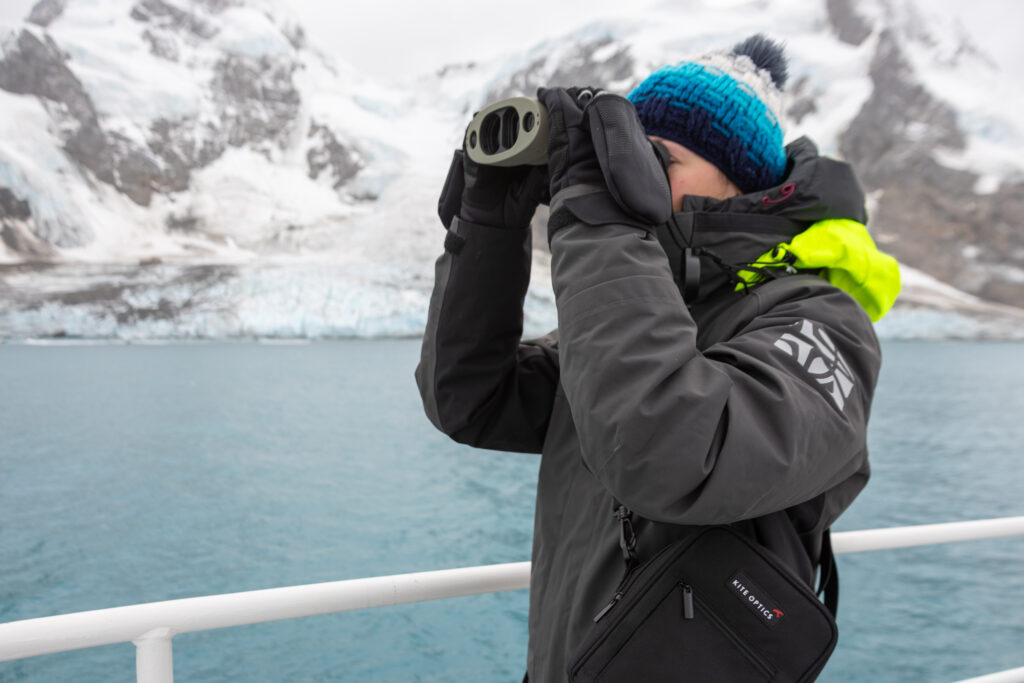
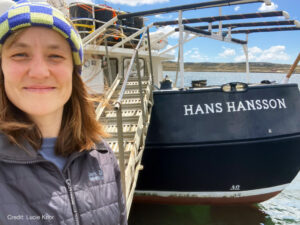
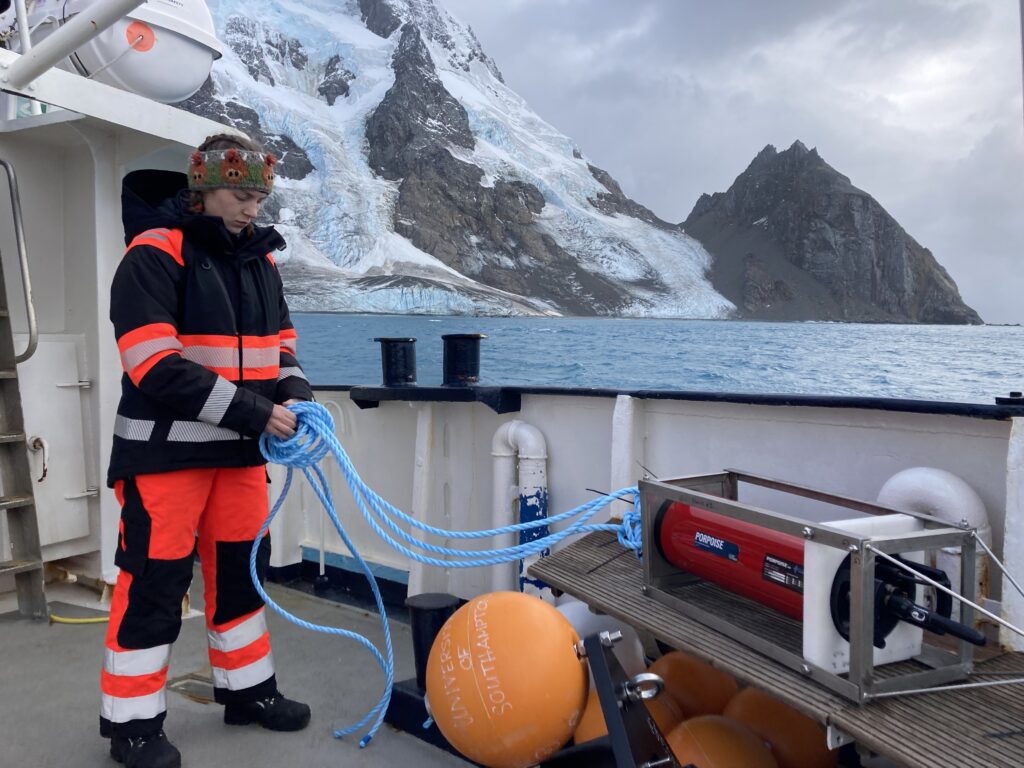
Dr. Mestre joined the project in the field during the 2025 expedition, which faced significant challenges with weather, rough seas, and fog. These conditions limited visibility and restricted rigid inflatable boat (RIB) operations, which made many of the planned whale observations and tagging efforts impossible. The team adapted by focusing on what could be achieved safely, continuing to collect acoustic data on krill swarms using the Hans Hansson’s echosounder, deploying hydrophones to monitor whale vocalizations, and conducting a limited number of fin whale biopsies. They are using these small samples of skin and blubber to study the fin whale population’s genetics and diet, as existing knowledge of fin whale ecology is limited.
Since returning from Antarctica, Dr. Mestre has focused on integrating historical tracking data for humpback and minke whales with fishing vessel movement data to identify patterns of spatial and temporal overlap. She hopes to use data from satellite tags deployed on fin whales by collaborators to compare fin whale movements with these historical analyses.
The team has submitted their preliminary findings directly to CCAMLR to inform management decisions. Dr. Mestre hopes that their results will improve protections for whales by showing when and where different species are at risk. In the future, the team aims to combine data on krill swarms with environmental variables such as sea ice, ocean temperature, and ocean currents to predict where krill, whales, and fishing vessels are most likely to overlap, anticipate areas of potential competition, and support precautionary management approaches.
This study was funded by the UK Government through the Darwin Plus project ‘Safeguarding Antarctic Krill Stocks for Baleen Whales’ (DPLUS185).
Notable memories
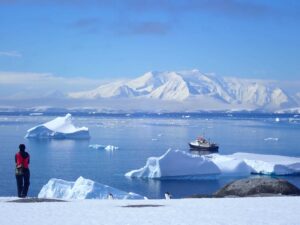
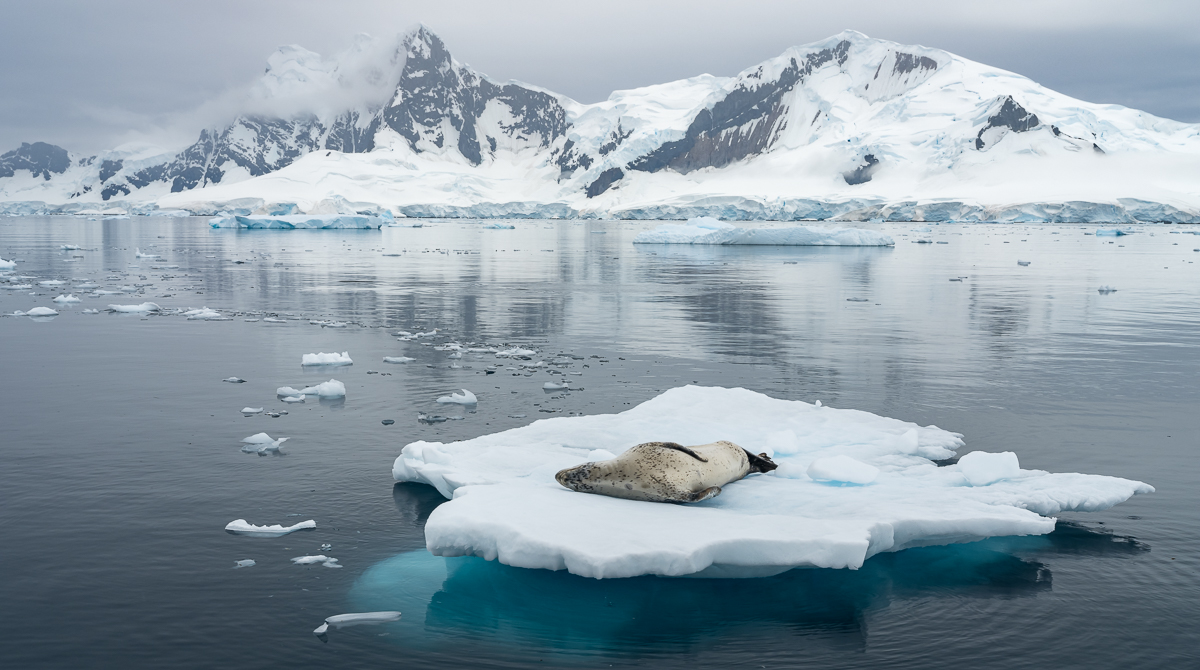
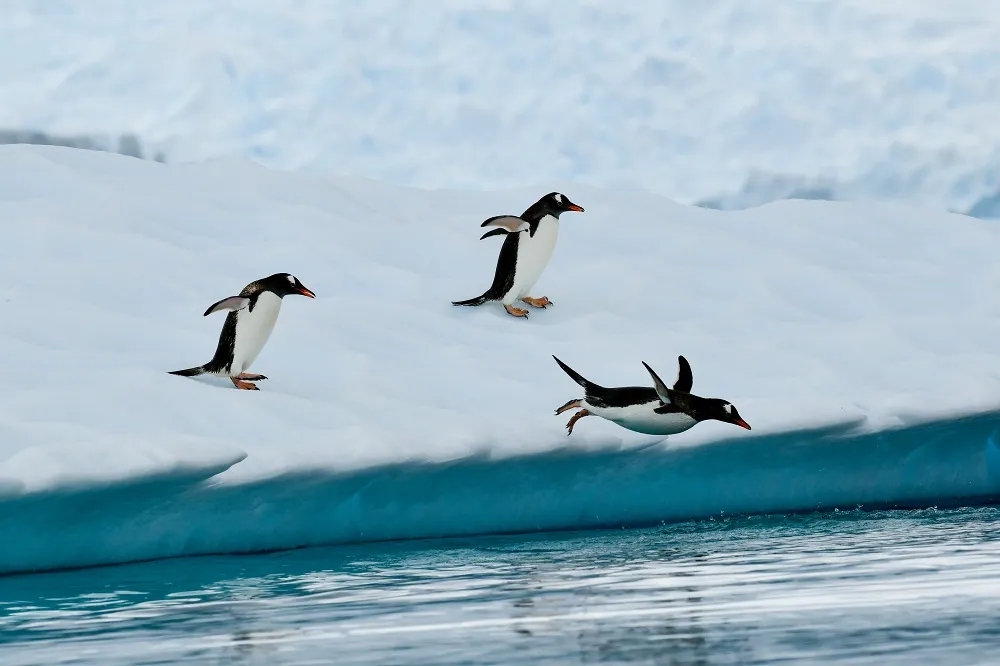
Despite the substantial challenges posed by the weather, the Antarctic landscape left a lasting impression on Dr. Mestre. The towering mountains of Elephant Island rising directly from the sea reminded her of her smallness within such vast surroundings, and seeing large numbers of fin whales near the ship was unforgettable. On a rare trip in the RIB boat, she watched penguins and fur seals swimming past the icebergs, a scene that made her feel as if she were inside one of the nature documentaries she loved as a child. The remoteness of the environment also fostered strong connections with the crew, who assisted with the team’s fieldwork and helped prepare and deploy the hydrophone equipment.
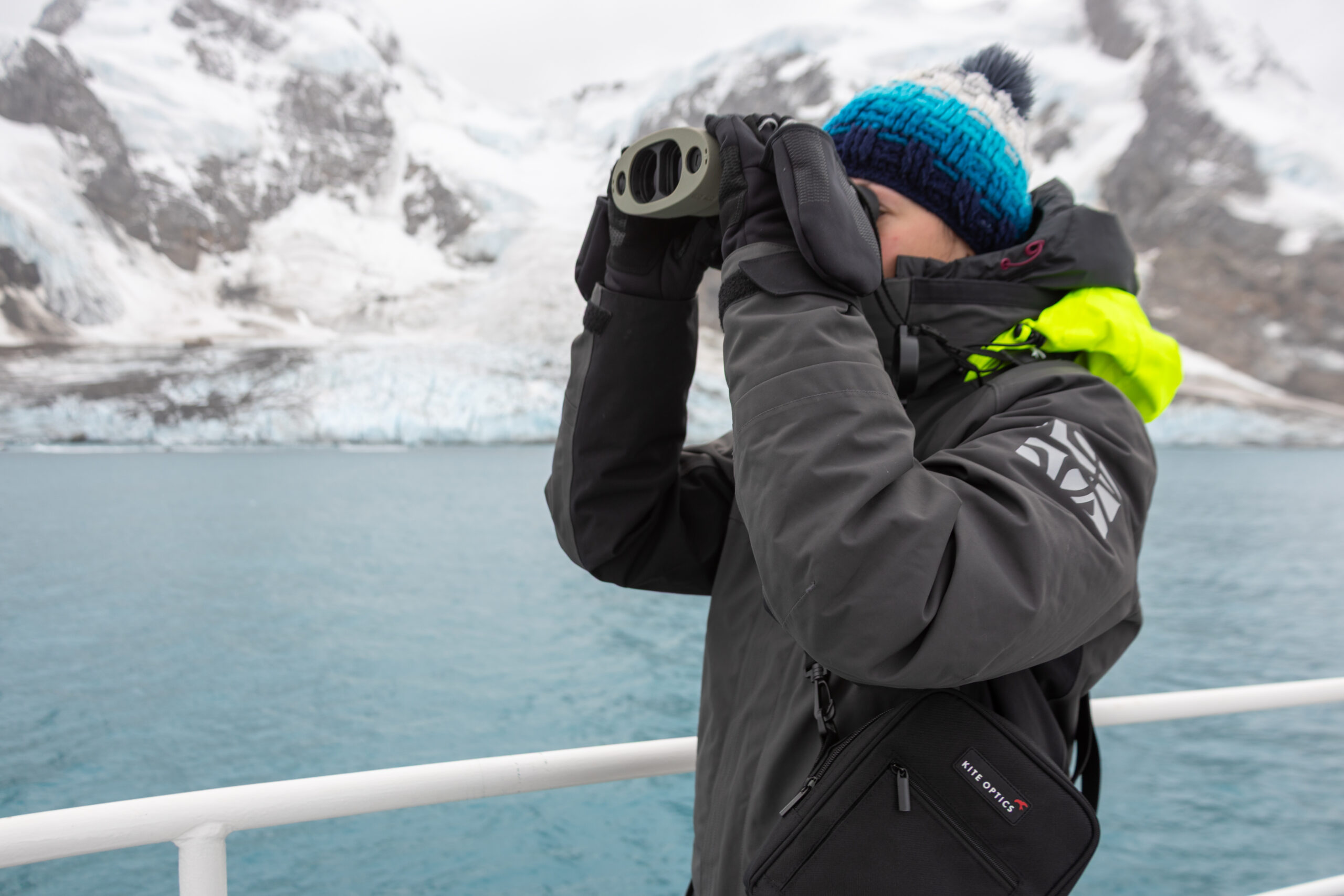
The research team is grateful to the Hans Hansson crew members for their support throughout the field trip. They would also like to thank Kite Optics for loaning stabilized binoculars for spotting whales.
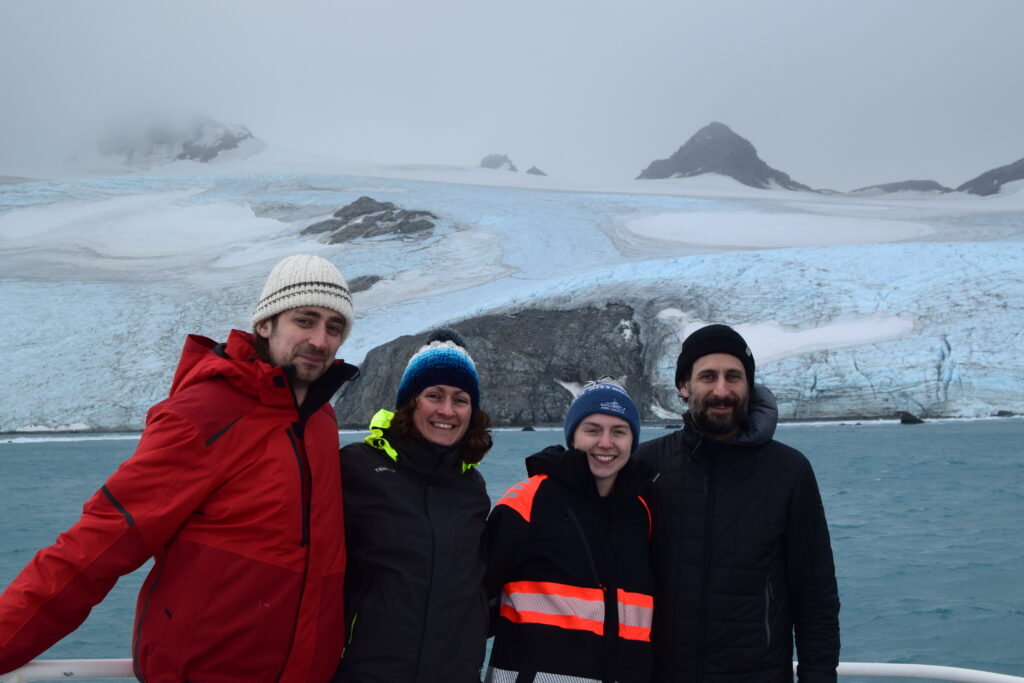
We’re grateful to work with Dr. Mestre and the rest of the research team and wish them luck as they continue their project!