
Sculptures of Crystal: Antarctica Icebergs Guide, the Soul of the White Continent
Antarctica Icebergs Guide: When you first set eyes on the Southern Ocean, your perspective on “nature” changes forever. It is not just a body of water; it is the world’s largest and oldest open-air art gallery. On an Antarctica micro-cruise, icebergs are not merely distant white dots on the horizon; they are the living protagonists that dictate our navigation, shift the hues of the sea from emerald to deep indigo, and whisper the ancient history of our planet.
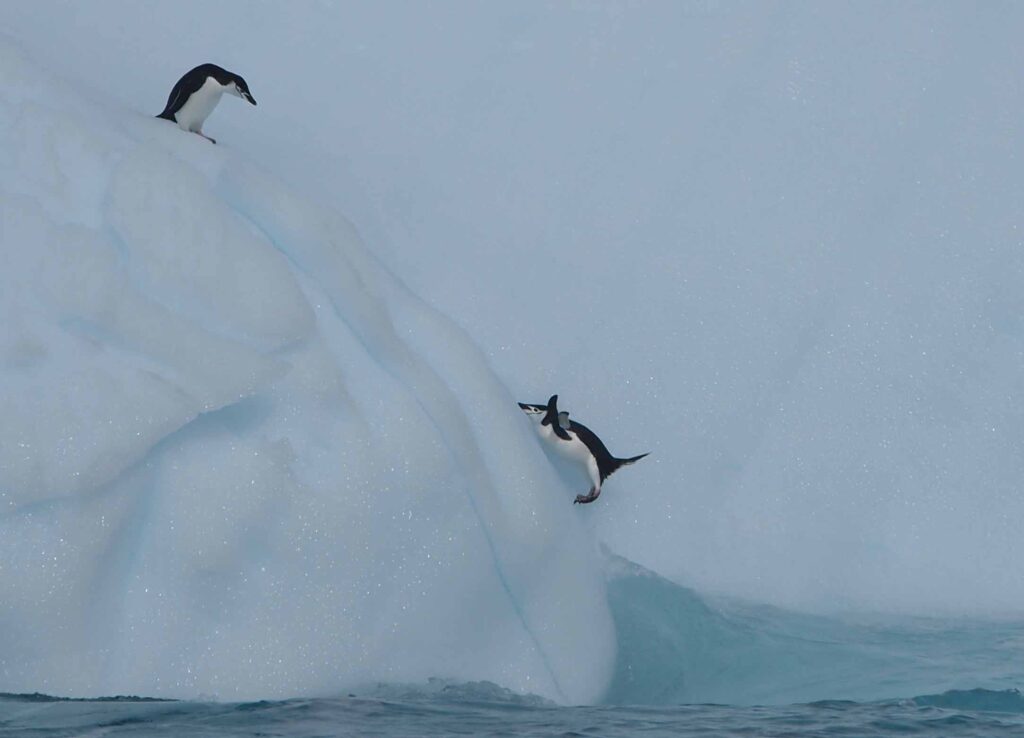
The Origin of Giants: From Glaciers to the Sea
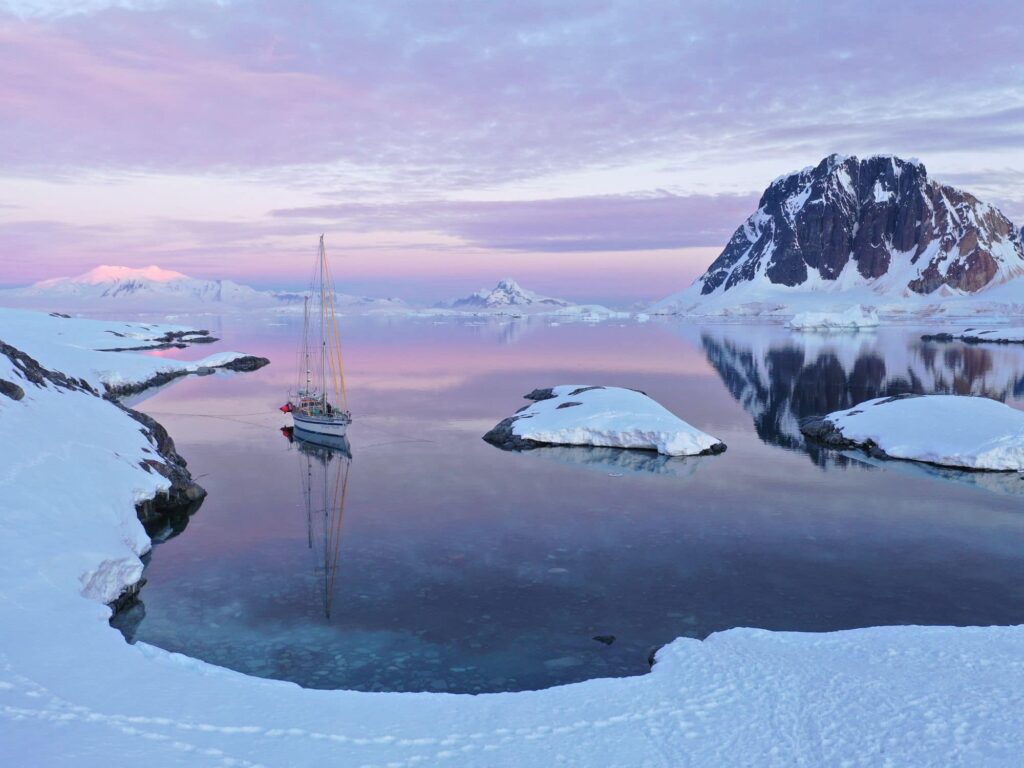
To understand the majesty of these formations, we must first understand their birth. Unlike sea ice—which is relatively thin and forms when ocean water freezes—icebergs are born on land. They are massive fragments of glaciers or ice shelves that, under the immense pressure of their own weight, eventually break off (a process known as “calving”) and begin their wandering journey.
When planning your trip to Antarctica, the first encounter with a “tabular iceberg” is often a highlight. These are enormous, flat-topped slabs of ice that can span several miles in length. Seeing them from the deck of a small vessel provides a sense of scale that larger cruise ships simply cannot match. You aren’t just looking at the ice; you are moving alongside it, feeling its cold breath on your face.
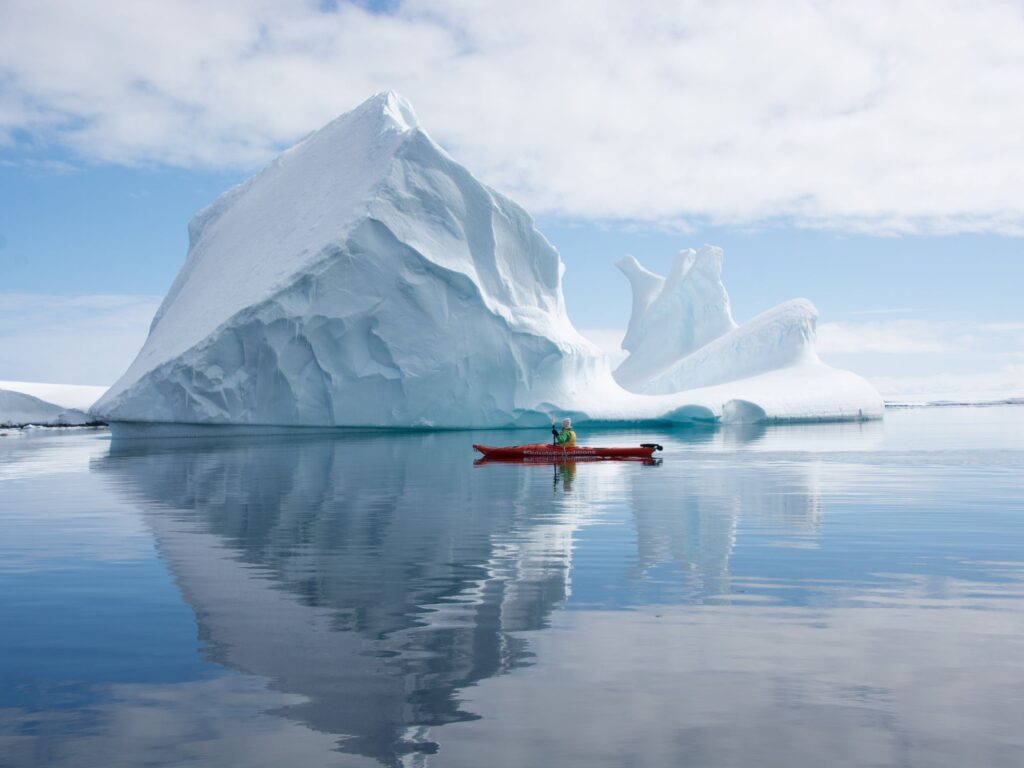
Why Are They Blue? The Science of Compressed Time
One of the most frequent questions from our travelers is about the intense, almost neon blue color of certain icebergs. This is not a trick of the light; it is the result of thousands of years of compression.
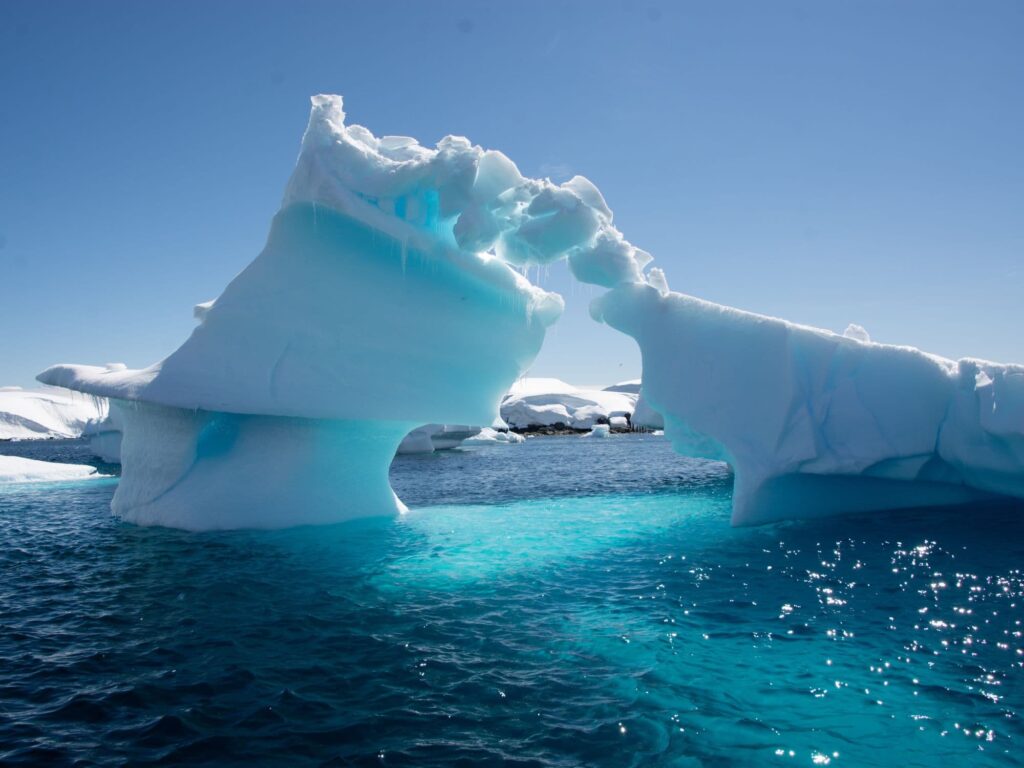
As snow falls on the Antarctic interior and turns into glacial ice, the weight of new layers squeezes out the air bubbles. When the ice is extremely dense and bubble-free, it absorbs the red part of the light spectrum and reflects the blue. This visual spectacle is a sign of ancient ice, and it can only be truly appreciated when the Antarctica temperature remains low enough to keep these structures from melting too quickly. On a micro-cruise, we often maneuver close enough to see the intricate textures—dimples and grooves—carved by the wind and the waves.
An Ecosystem in Motion: Life Beneath the Surface
It is a common mistake to think of icebergs as sterile, frozen blocks. In reality, they are islands of life. As an iceberg melts, it releases minerals and nutrients that have been trapped in the ice for centuries. This process “fertilizes” the surrounding water, sparking blooms of phytoplankton.
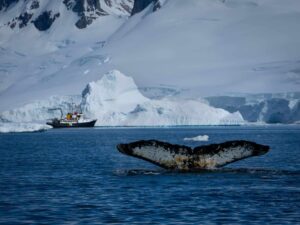
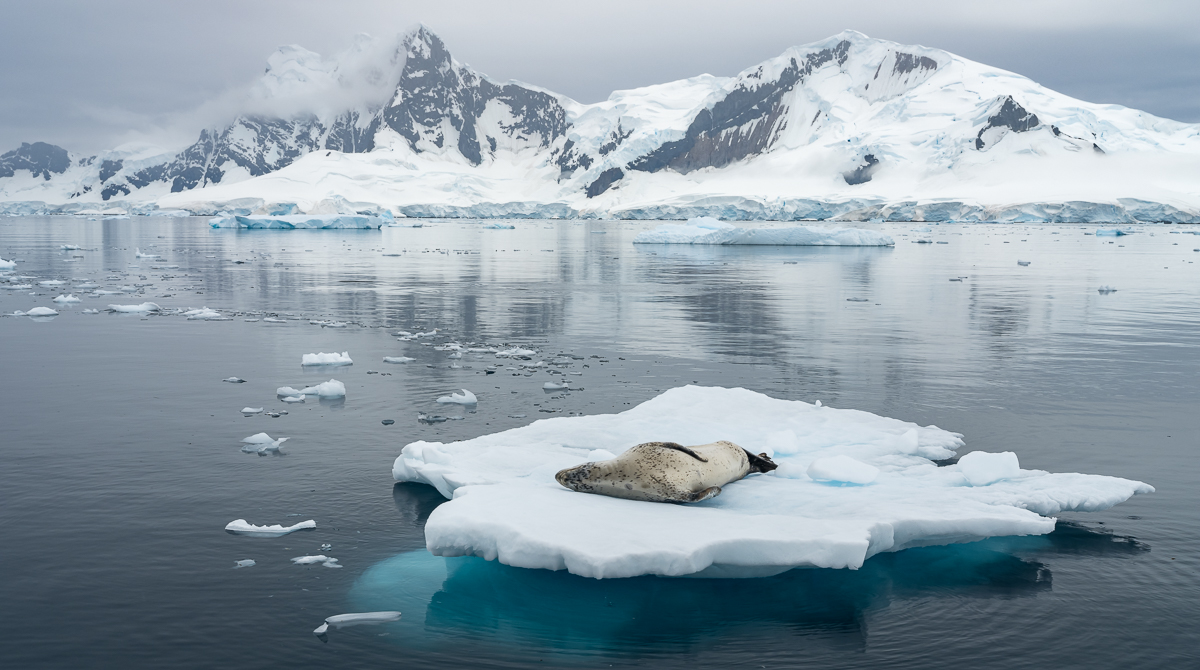
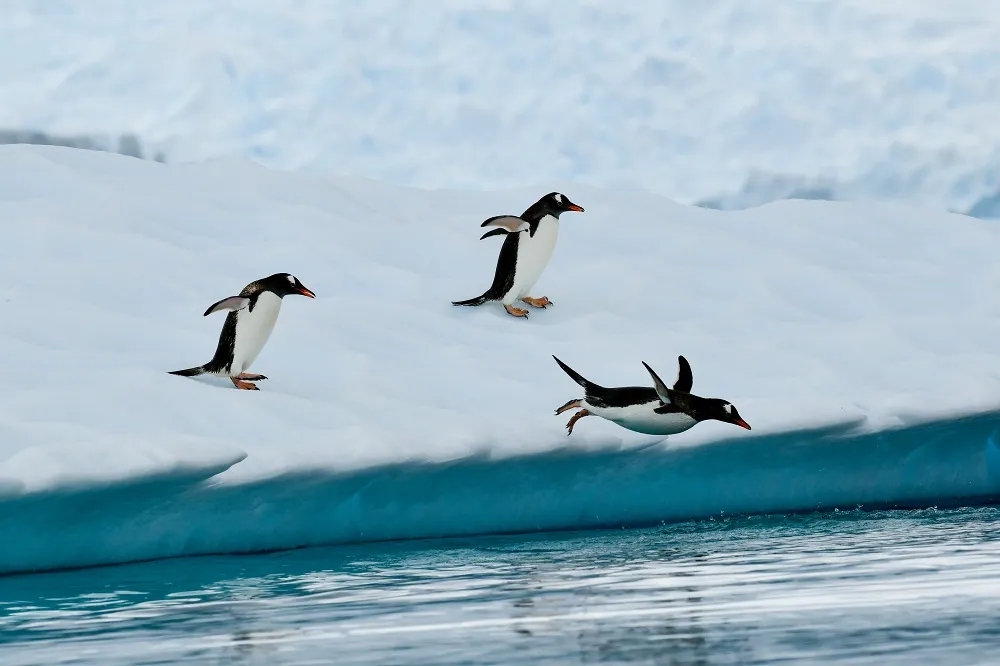
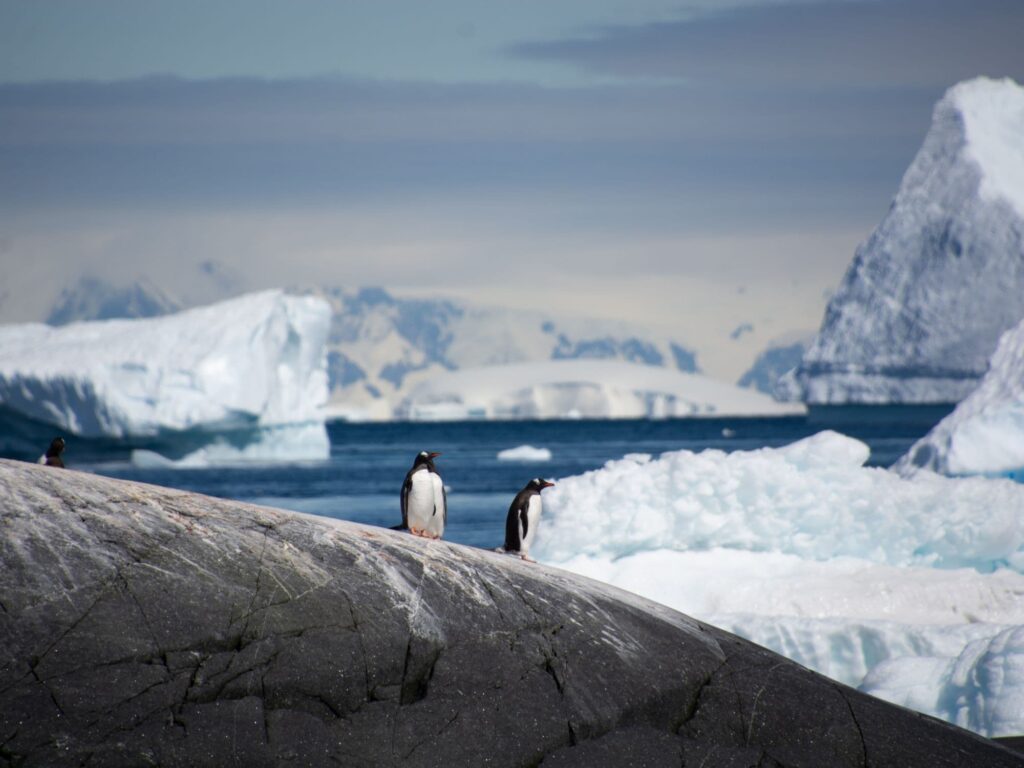
This abundance of food attracts the entire Antarctic food chain. It is common to see how Antarctica penguins use small floes (or “bergy bits”) as rafts to rest between foraging trips or to stay out of reach of leopard seals. Even whales are often found feeding in the nutrient-rich waters near large bergs.
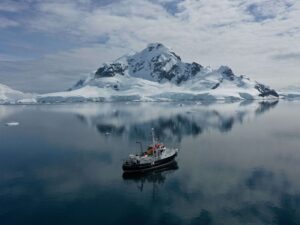
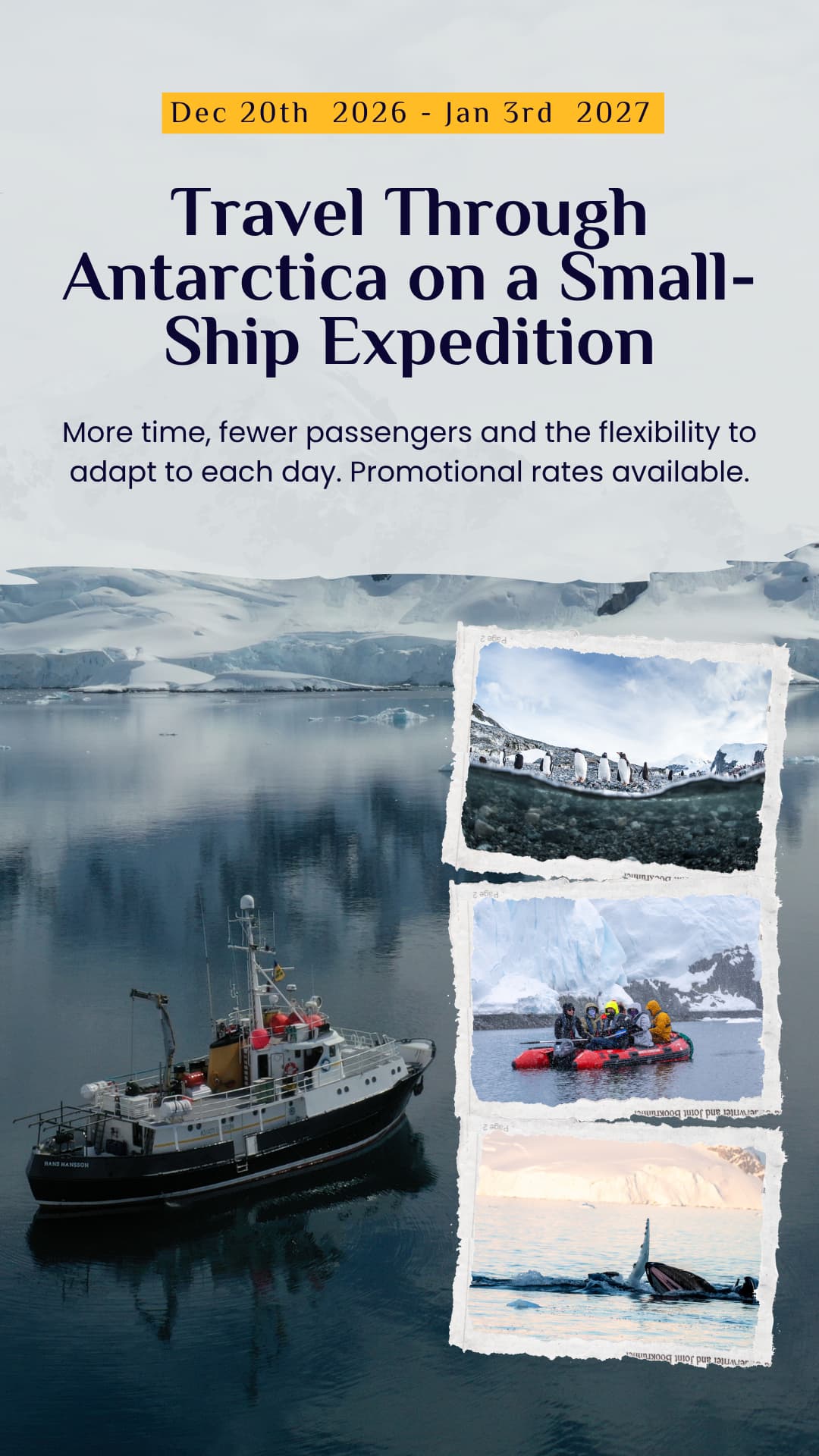
From the deck of the Hans Hansson, you can experience the “bergie seltzer”—a distinct fizzing sound caused by the release of highly compressed air bubbles as the ice melts. It is the sound of the Earth’s atmosphere from 10,000 years ago finally reaching the surface.
Navigating Among Giants: The Micro-Cruise Advantage
The climate rules the south. The Antarctica weather can change in a matter of minutes, shifting massive ice fields and closing off channels that were clear just an hour before. This is where the advantage of a micro-cruise is absolute.
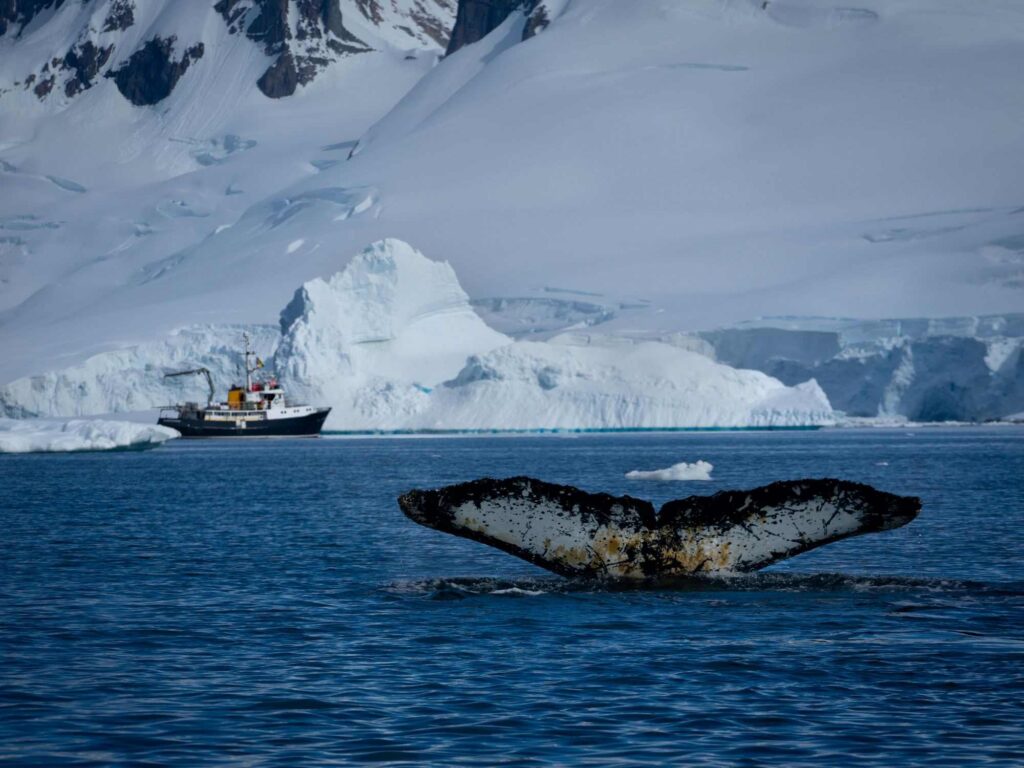
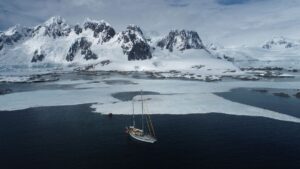
Large ships are often forced to stay in deep, open water for safety. However, our smaller, more agile vessels can navigate narrow channels and enter shallow bays filled with “growlers” (ice fragments the size of a grand piano) and “bergy bits.” Our captains use their expertise to maneuver safely, giving you a front-row seat to the dramatic “ice graveyards” where grounded icebergs sit like silent sentinels on the seafloor.
An Ice Desert: A Land of Contradictions
Although it seems contradictory to see millions of tons of frozen water, the truth is that is Antarctica a desert because it receives very little actual precipitation. The icebergs we see today are the result of snow that fell thousands of years ago, slowly making its way to the coast.
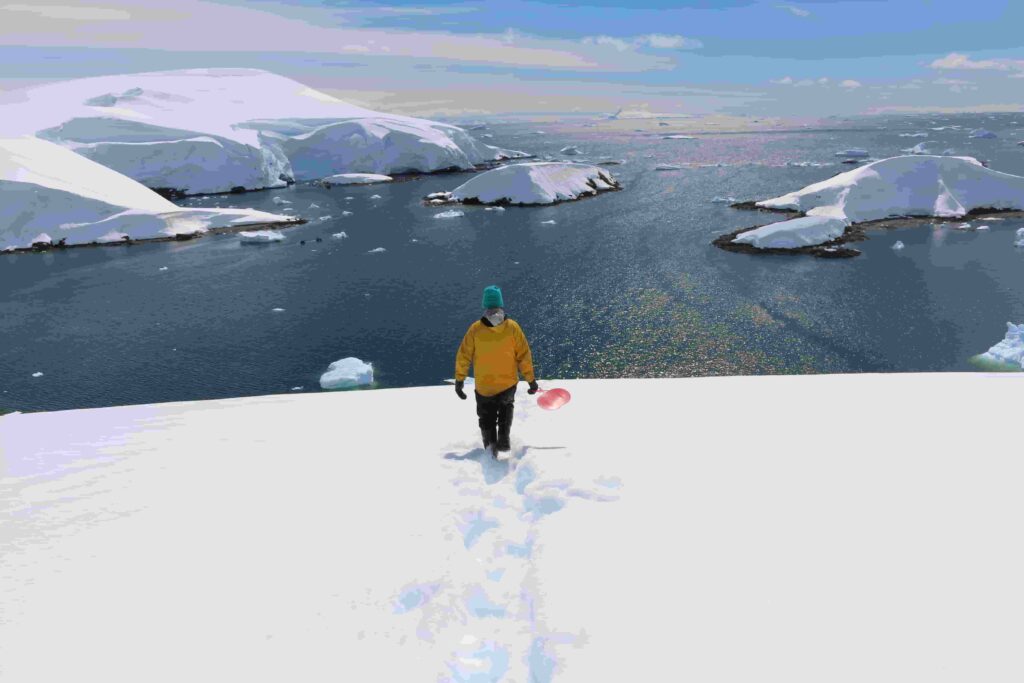
Seeing these sculptures up close is the key to understanding both the fragility and the power of this unique ecosystem. They are reminders of the climate’s past and indicators of its future. Every iceberg has a shape that will never be repeated, and a journey that ends only when it finally melts into the vastness of the Southern Ocean.
Your Front Row Seat to the Ice
Whether you are a photographer looking for the perfect play of light on a crystalline surface or a nature lover wanting to hear the crack and groan of the shifting ice, there is no better way to experience it than from the water level. At 60 South, we don’t just show you the ice; we take you into its heart.